
It's a first edition!
1ʳᵉ edition - Aix-en-Provence and Marseille
Practical details: 10 AMU students will be selected on registration.
Send CV (1 page) + cover letter (1 page) before March 30, 2026 to :
The Observatoire des publics et des pratiques de la culture amU and the Laboratoire de recherche sur les publics de la culture de l'Université de Québec à Trois-Rivières have joined forces to offer the first International Summer School on cultural audiences for students.
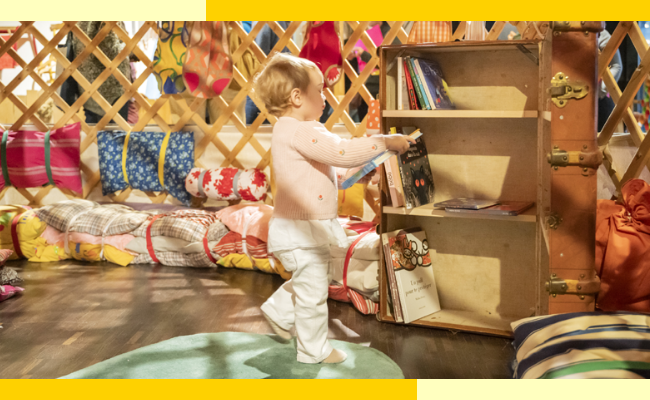
The aim of this International Summer School on cultural audiences is to work on facilitating access to works of art and heritage sites, with a renewed focus on early childhood: as a legitimate audience and as a vector for attendance by families and early childhood professionals.
Dates of the international summer school on cultural audiences: June 8 to 12, 2026
Locations: Aix-en-Provence and Marseille
Organizing committee: Aimée Gaudette-Leblanc, Audrey Lemaire, Marie-Claude Lapointe Laboratoire de recherche sur les publics de la culture, UQTR and Maria Elena Buslacchi, Elisa Ullauri Lloré, Observatoire des publics et pratiques de la culture, Mesopolhis (UMR 7064), amU.
Target audience: Undergraduate and graduate students, doctoral and post-doctoral students or young
interested in better understanding the strategies and techniques used to promote access to culture.
Context: The Observatoire des publics et des pratiques de la culture - MESOPOLHIS / Aix-Marseille Université and the Laboratoire de recherche sur les publics de la culture de l'Université de Québec à Trois-Rivières have joined forces to offer the first International Summer School on cultural audiences for 10 students from Aix-Marseille Université and 10 students from the Université de Québec à Trois-Rivières on the theme of cultural mediation for early childhood.
In France, artistic and cultural education (EAC), strongly invested in since the 2000s, was consolidated in 2017 as a ministerial priority, asserting itself as a lever for equal opportunities and emancipation. This orientation has encouraged the articulation of educational and cultural fields and the emergence of collaborative pedagogical practices between nurseries, schools and museum institutions(Buslacchi & Ullauri Lloré, 2026; Bordeaux & Kerlan, 2025; Jonchery & Octobre, 2022), mobilizing cultural mediators and bridge teachers to facilitate access to works and heritage sites(Joyeux, 2022). Since the 2010s, renewed attention has been paid to early childhood, in two ways: as a legitimate audience and as a vector for attendance by families and early childhood professionals.
The theory of cultural capital has long emphasized how cultural practices during childhood are a guarantee of continuity of practices in adulthood(Bourdieu & Passeron, 1964; Bourdieu & al., 1970, Bourdieu, 1979). While the paradigm of reproduction has also been criticized, it forms the basis of public policy on early learning. Recent studies in Quebec reaffirm its relevance: for example, young children whose mothers are readers are more likely to read for pleasure between the ages of 6 and 8 than those whose mothers are not(Pronovost, 2013), and to continue reading into adulthood.
Some people also report that their tastes and practices developed as a result of initiation by their parents when they were children(Lapointe, Luckerhoff & Prévost, 2020).
The influence of the family first, and then of other significant people and places, such as educators, teachers and school, plays an important role in transmission, reinforcement, initiation and new discoveries.
