
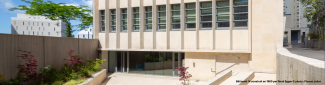
Turbulence is dedicated to teaching and research in the arts and cultural arts mediation at Master's and PhD levels. The building is an integral part of the Faculty of Arts, Letters, Languages and Human Sciences (ALLSH).
It is open to the public from 8.15am to 6.15pm, Monday to Friday.
-
Presentation
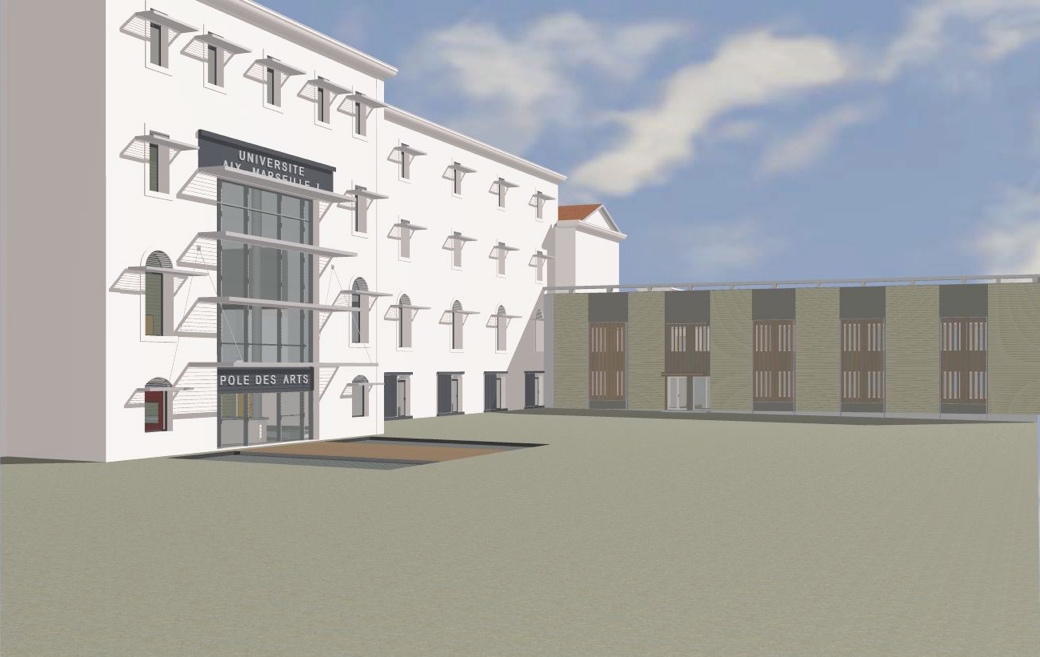
Since January 2021, the TURBULENCE building-14 of Aix-Marseille Université's Faculty of Arts, Letters, Languages and Human Sciences (ALLSH) has been hosting and supporting teaching and research in the arts and cultural arts mediation at master's and doctoral levels. Located in Marseille, at the heart of a dense network of cultural partners, this experimental facility is at the heart of the Euroméditerranée perimeter between La Joliette and La Belle de Mai, within the Saint-Charles site.
The aim of the Turbulence project is not only to give greater visibility to the artistic and cultural productions and theoretical work of the students and teacher-researchers in the Arts department and the LESA (Laboratoire d'Études en Sciences des Arts), but also to work in collaboration with the world of arts and culture. It also supports the development and structuring of disciplinary and interdisciplinary approaches in the fields of research-creation and arts mediation. Its exhibition and projection rooms are both pedagogical tools and spaces for the presentation/dissemination/mediation of arts research.
-
Training
Master Arts
Master of Cinema and Audiovisual Arts
-
Search
Attached to the UFR ALLSH, the Laboratoire d'Études en Sciences des Arts (EA 3274) brings together all the artistic sectors of Aix-Marseille University. It supports research and specialized work in the following disciplines: visual arts, performing arts, cinema, aesthetics and arts sciences, cultural mediation, music and music sciences.
 Logo_LESAH.jpeg
 -
Site history
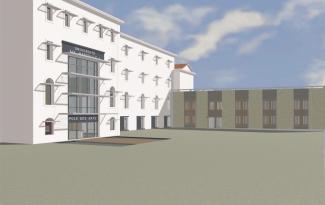
FROM MATERNITY TO TURBULENCE
Genesis of an interdisciplinary artistic project at Aix-Marseille UniversityThe opening of the Turbulence building in January 2021 is the result of a long collective journey that began in the mid-2000s, under the impetus of a group of teacher-researchers from the former art departments at the Université de Provence (Aix-Marseille 1). The aim was already to bring together all the artistic fields of the UFR LACS in a scientific, academic, cultural and artistic project that was interdisciplinary, unique and innovative.
"Turbulence" is the concrete expression of this project, which was initially conceived as a stand-alone arts institute. A working group made up of representatives from each department determined the project's focus: Michel Guérin (PR in aesthetics, Plastic Arts and Art Sciences department), Danielle Bré (MCF Performing Arts department, in charge of the university's cultural mission), Jean-Luc Lioult (PR in documentary film aesthetics, Cinema department), Pascal Césaro (MCF Cinema department), Sylvie Coëllier (PR in contemporary art history, Plastic Arts and Art Sciences department), Louis Dieuzayde (MCF Performing Arts department), Christine Esclapez (PR in musicology, Music department) and Jean Arnaud (PR in plastic arts, Plastic Arts and Art Sciences department).
The first studies were carried out in 2006 on a disused building, the former Maternité du quartier Belle de Mai (BDM), located behind the current Friche BDM. A few extracts from the minutes of the working group's meeting (October 11, 2007) illustrate the guidelines and activities envisaged for the future Arts department to be housed in the Maternité BDM:
"[...] The cultural activities of the future Arts department, which will bring together all the Arts and Cultural Art Mediation courses at the University of Provence, are essential to the operation of the BDM site and its influence outside the university. From a pedagogical and professional standpoint, students and researchers alike need this multi-faceted department to be a hub for diverse and coherent cultural initiatives.
The future Arts department's dual mission of training and research can be made more effective by developing another essential objective, made possible by the BDM site's facilities (exhibition space, theater, cinema, auditorium). The aim is to create a fruitful and ambitious working relationship between the university's artistic and cultural training courses on the one hand, and local, regional, national and international players in the creative arts on the other.
[...] The Arts Department must provide itself with the means to lead university research in direct contact with experiments carried out by artists of all disciplines outside the university. These postulates determine four axes around which the activities of the Arts department can be structured:
- Refining the relationship between theory and artistic practice, objects of shared reflection and experimentation;
- Developing interdisciplinarity between the arts;
- Promoting cooperation between teachers, teacher-researchers, researchers, artists, students and cultural professionals;
- Setting up the structural and financial resources needed to communicate its research work and artistic experiences to the public. [...] "
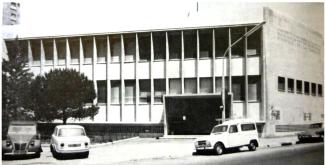
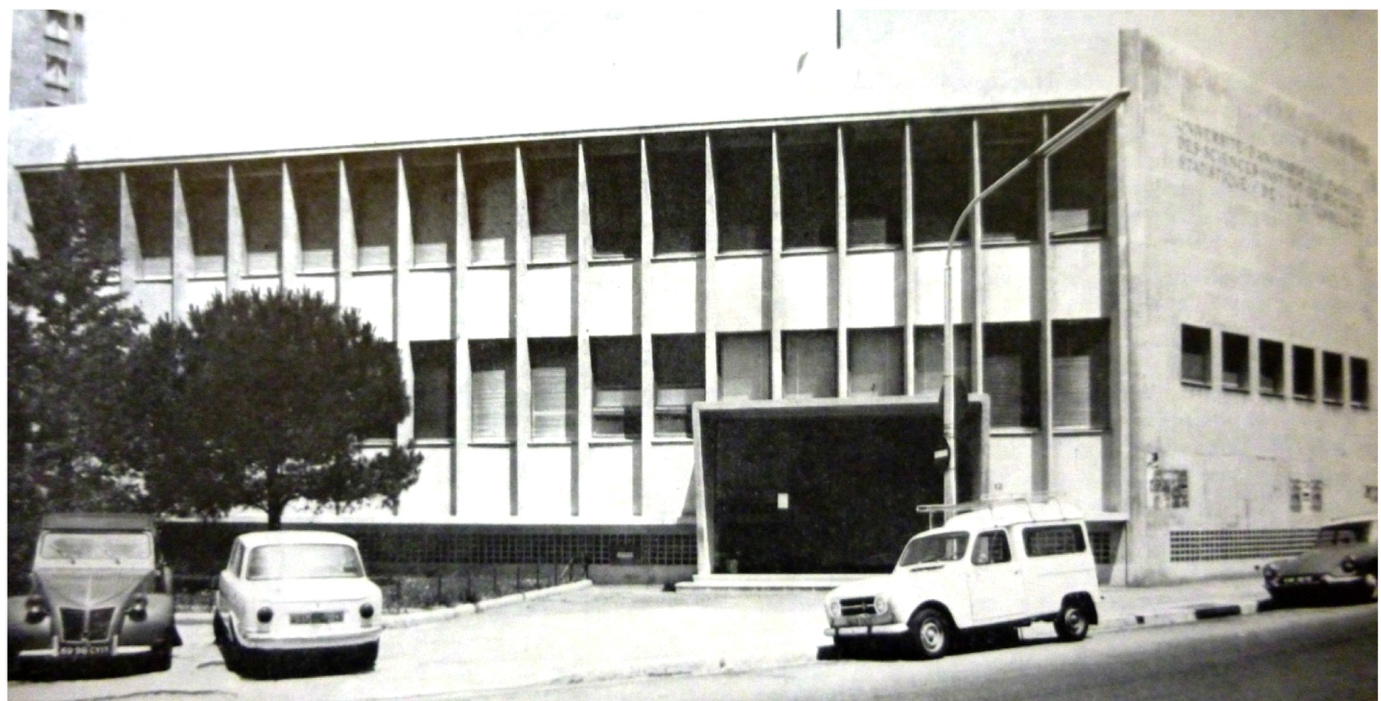
The Arts Department was created in 2012, and studies for the redevelopment of this building were at an advanced stage of programming. Work was due to start in December of that year, but never did... A political reorientation linked to the creation of AMU prevented this first project from materializing, for essentially financial reasons. However, the accumulated experience was very useful insofar as the department's staff did not abandon the idea of this much-needed project. An enlarged technical collective was set up, with Jean Arnaud acting as the user referent and interlocutor with AMU and the various institutions between 2013 and 2019. An alternative proposal was drawn up and put forward. Among the buildings available on various AMU sites, the choice finally fell, after a phase of intense debate, in liaison with AMU President Yvon Berland and Vice President for Heritage Hervé Isar (DPPI), on Building 14 (formerly the Cybercentre) on the Saint-Charles site, also in Marseille. This building, which had been constructed in the mid-1950s to study the physical phenomena of turbulence and flows, finally gave an identity to the arts project, now officially named "Turbulence".
In 2013, a document presenting the Arts Department's new "research/culture/training" project, still financially supported by the City of Marseille, stated: "This proposal indicates the operating mode and possible organization of relations between university research, student training and outward-looking artistic activities, concerning the cultural facilities requested on both sites". As Turbulence could not accommodate the 1,000 students in the Arts department, the current project had to be dedicated essentially to research and training activities starting with the Master's degree. Although its topology has changed, the "arts project" remains founded on the same desire for openness and interdisciplinarity in the arts at university that he has constantly imagined and brought to life from the outset.
"La Turbulence sees itself not only as a laboratory for disciplinary research, but also as a laboratory for experimental transversality between the arts and their mediation. It will also be a privileged venue for student and professional exhibitions and productions [...]. [...]. This space is intended to be a place of synergy with the art world in all its forms, and of occasional openness to the public for certain events".
-
Events
Turbulence houses a 74-seat + 3 PRM projection/auditorium and a 100m² exhibition space open on 3 levels. You'll find their technical specifications below:
Turbulence aims to be a place of encounter and exchange, where the university opens up to the city.
Our premises are therefore open to any type of artistic, scientific or cultural partnership related to our teaching and research activities.
Please use the following form to submit your request:
CONTACTS AND ACCESS
Turbulence - Building 14
Campus Centre - site Sᵗ Charles
3, place Victor Hugo
13331 Marseille Cedex 03
Contact Turbulence (outside school hours):
allsh-turbulence-adm@univ-amu.fr
School
School contact:
allsh-scol-stcharles@univ-amu.fr
Espace Yves Mathieu - building 15
